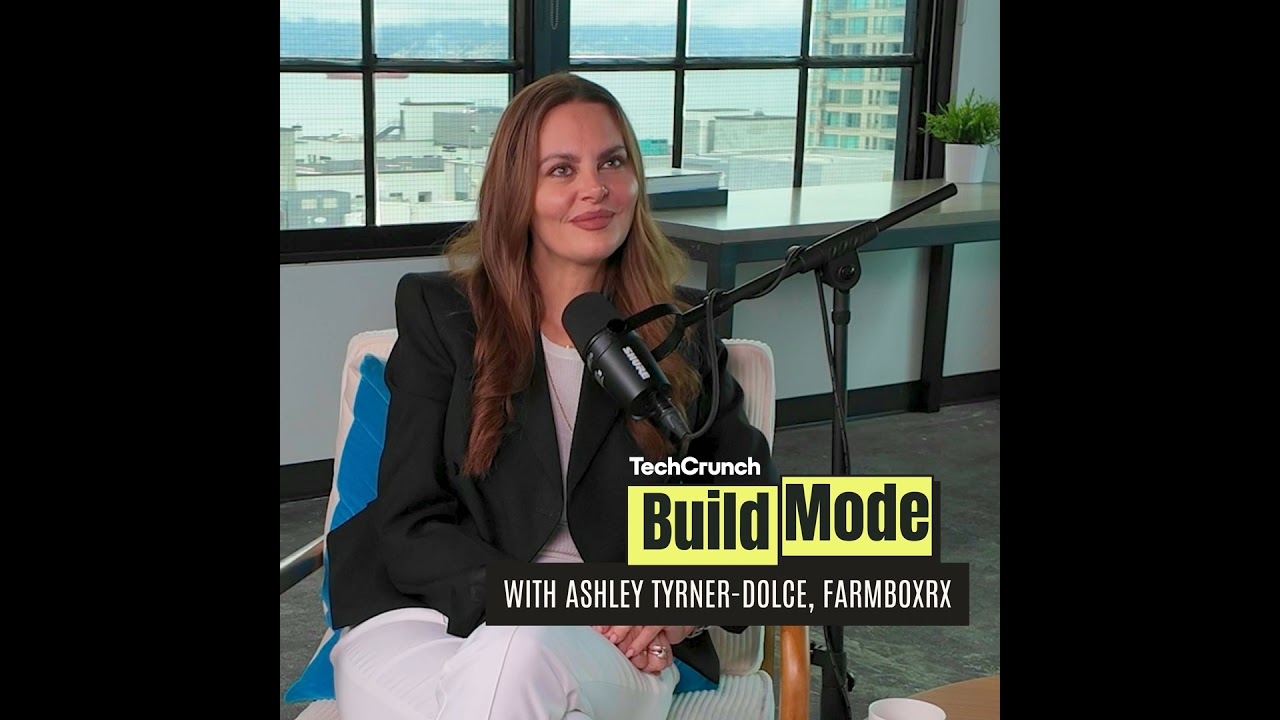
Ashley Tyrner-Dolce spent more than a decade building FarmboxRx without taking a single dollar of venture capital and ultimately exited the company while still owning the majority of it.
In this episode of Build Mode (https://techcrunch.com/podcasts/build-mode/) , host Isabelle Johannesen sits down with Ashley to talk about what bootstrapping actually looks like when you don’t have money from a previous exit or a wealthy network to fall back on.
Ashley started the company after experiencing food insecurity herself. Years earlier, while pregnant with her daughter, she relied on food stamps and lived in a rural food desert where getting fresh food could mean a 30-minute drive. She eventually launched Farmbox Direct as a direct-to-consumer produce delivery company before pivoting the business into healthcare and building what became FarmboxRx.
Along the way, Ashley tried to raise venture capital, but investors pushed her to turn the company into a meal-kit business, a direction she believed would take it away from the customers she wanted to serve. Instead, she kept bootstrapping. That meant cutting expenses, reinvesting money into the company, negotiating longer payment terms with vendors, using credit card points for travel, and at times stopping her own salary to make payroll.
Now an investor herself at HLM Investments, Ashley explains what bootstrapping signals to a VC, why founders should think carefully about when they raise outside capital, and why she believes traction can put founders in a much stronger position before they take a check.
They get into:
•
How Ashley started FarmboxRx without venture funding
•
Why early VCs wanted her to turn the company into a meal kit
•
What bootstrapping looks like when you don’t have a financial safety net
•
How she stretched cash flow and negotiated vendor payment terms
•
Why she sometimes stopped paying herself to make payroll
•
How cold calling helped land FarmboxRx’s first healthcare customers
•
Why founders should stay involved in sales
•
What bootstrapping signals to Ashley now that she’s a VC
•
Why she walked away from term sheets and acquisition offers
•
The financial upside of maintaining ownership through an exit
•
Why she wouldn’t raise a seed round if she started another company today
•
When founders should consider taking venture capital
•
Why bootstrapping after a previous exit is a very different experience
•
How founders can build investor relationships even when they aren’t raising
Chapters:
00:00 — The case for bootstrapping01:42 — How Ashley started FarmboxRx03:50 — Bootstrapping without a financial safety net07:16 — Why VCs struggled to understand the business10:21 — Proving the investors wrong12:34 — Building a network without VC backing15:24 — Getting advice from VCs without taking their money17:36 — Why Ashley refused to change her vision20:14 — Walking away from term sheets and acquisition offers22:32 — What bootstrapping signals to a VC25:08 — Getting creative with cash flow27:09 — The upside of bootstrapping28:54 — What Ashley would tell a founder starting with $50K30:26 — How to land your first customers34:44 — Would Ashley take VC money today?35:55 — Why founders should wait longer to raise36:55 — Not all bootstrapping is the same39:30 — The difference between bootstrapping with and without money
Join us at TechCrunch Disrupt October 13-15 in San Francisco. Use promo code: buildmode25 for 25% off your ticket.
Subscribe to Build Mode on Apple Podcasts (https://podcasts.apple.com/gb/podcast/build-mode/id1561051074) , Spotify (https://open.spotify.com/show/0Dqmcq2aDrZkS9v1fITOKV) , or wherever you like to listen (https://pod.link/aHR0cHM6Ly9mZWVkcy5tZWdhcGhvbmUuZm0vWUZMNjEyNzkzNjQ5NA) . And watch the full videos on YouTube (https://www.youtube.com/@TechCrunch) . New episodes of Build Mode (https://techcrunch.com/podcasts/build-mode/) drop every Thursday.
Hosted by Isabelle Johannesen. Produced and edited by Maggie Nye. Audience development led by Morgan Little. Special thanks to the Foundry and Cheddar video teams.